What does it mean to be intelligent? At what level does competence evolve into a display of intelligence? These questions become particularly intriguing when we examine them in the light of artificial intelligence (AI). Are the AI platforms we interact with, like ChatGPT, truly intelligent? Or is their perceived intelligence merely a clever marketing label? Read on to explore what intelligence is and compare the function of artificial intelligence to the definition of intelligence to answer the question - is artificial intelligence really intelligent?
The term 'intelligence' has multiple definitions. According to the Oxford Languages definition provided by a simple Google search, intelligence is both:
Interestingly, the first definition suggests an active process, almost verb-like in its emphasis on application. The second definition, more static, aligns closely with the idea of a repository of information. In the context of AI, particularly in its common name "artificial intelligence," we might be dealing more with a high crystallized intelligence, albeit in a nuanced manner.
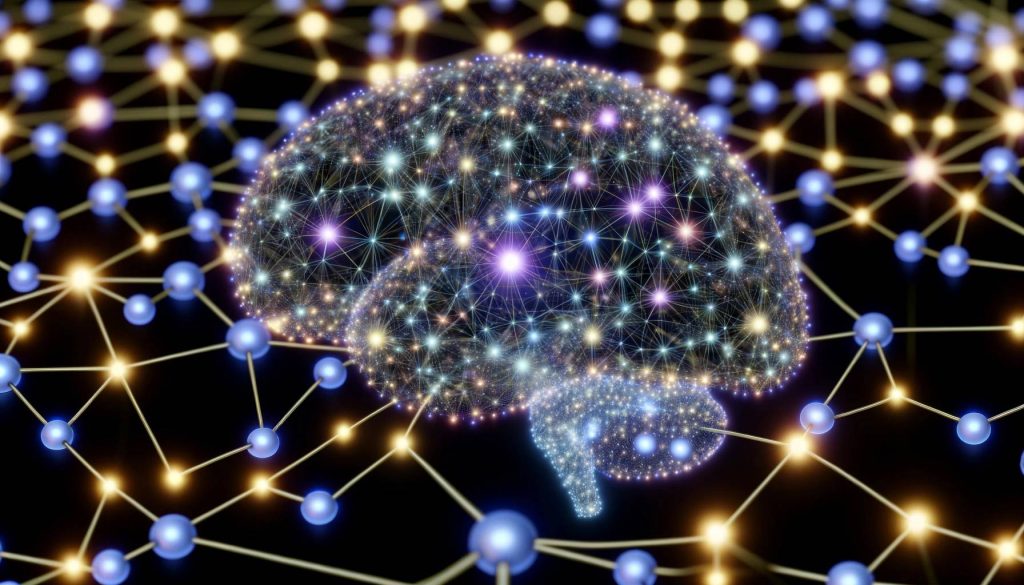
Artificial intelligence initially appears as a digital counterpart to human intellect. While interacting with AI, one might feel they are conversing with a knowledgeable entity. However, this illusion of intelligence stems from AI's sophisticated use of a vast database and fine-tuned algorithm, rather than an inherent cognitive ability. It's when we ask AI to perform complex tasks, like scheduling within parameters, that we realize its limitations.
AI's intriguing aspect lies in its ability to maintain contextual conversations, giving an impression of adapting intelligence. However, this 'intelligence' is transient, resetting with each new session.
AI, or more accurately, large language models, are not just sophisticated programs but a culmination of immense data analysis and human-guided training. The question arises: does this sophisticated mimicry of human conversation qualify as intelligence under our earlier definition, or is it merely what Emily M. Bender, in her paper "On the Dangers of Stochastic Parrots: Can Language Models Be Too Big?", refers to as a "stochastic parrot"?
Bender argues that LLMs, despite their complexity, essentially stitch together linguistic forms without true understanding or meaning. Intelligence, as we defined it, involves the application of knowledge with intent and understanding - something current AI lacks.
What we have is an algorithm fine-tuned to feed our own words back to us, with its creators relying on our own ability to communicate. According to Bender, “our perception of natural language text, regardless of how it was generated, is mediated by our own linguistic competence and our predisposition to interpret communicative acts as conveying coherent meaning and intent, whether or not they do.”
The term 'artificial intelligence' is indeed catchy, resonating with the long-standing fascination with intelligent machines. The resemblance of AI's neural networks to our brain's functioning might suggest a form of intelligence. However, it's more a mirroring of our intelligence rather than an independent cognitive entity.
In my experience, the real value of AI lies in its ability to augment our own intelligence. My interactions with AI have significantly enhanced my productivity and creativity. This blog itself is a testament to AI's potential in amplifying human intelligence. Through its use, we can solve so many challenges, but only when we truly understand what we are working with. At present, that is not true intelligence, something the industry now refers to as artificial general intelligence - AGI. Its ironic that the industry itself needs to differentiate between these programs to draw the line between actual intelligence and the mere appearance of intelligence.
While AI may not meet the traditional criteria of intelligence, its ability to simulate and extend our cognitive capabilities is undeniable. As we continue to integrate AI into our lives, it’s crucial to understand its limitations and potentials, ensuring we use it as a tool to enhance, not replace, human intelligence.